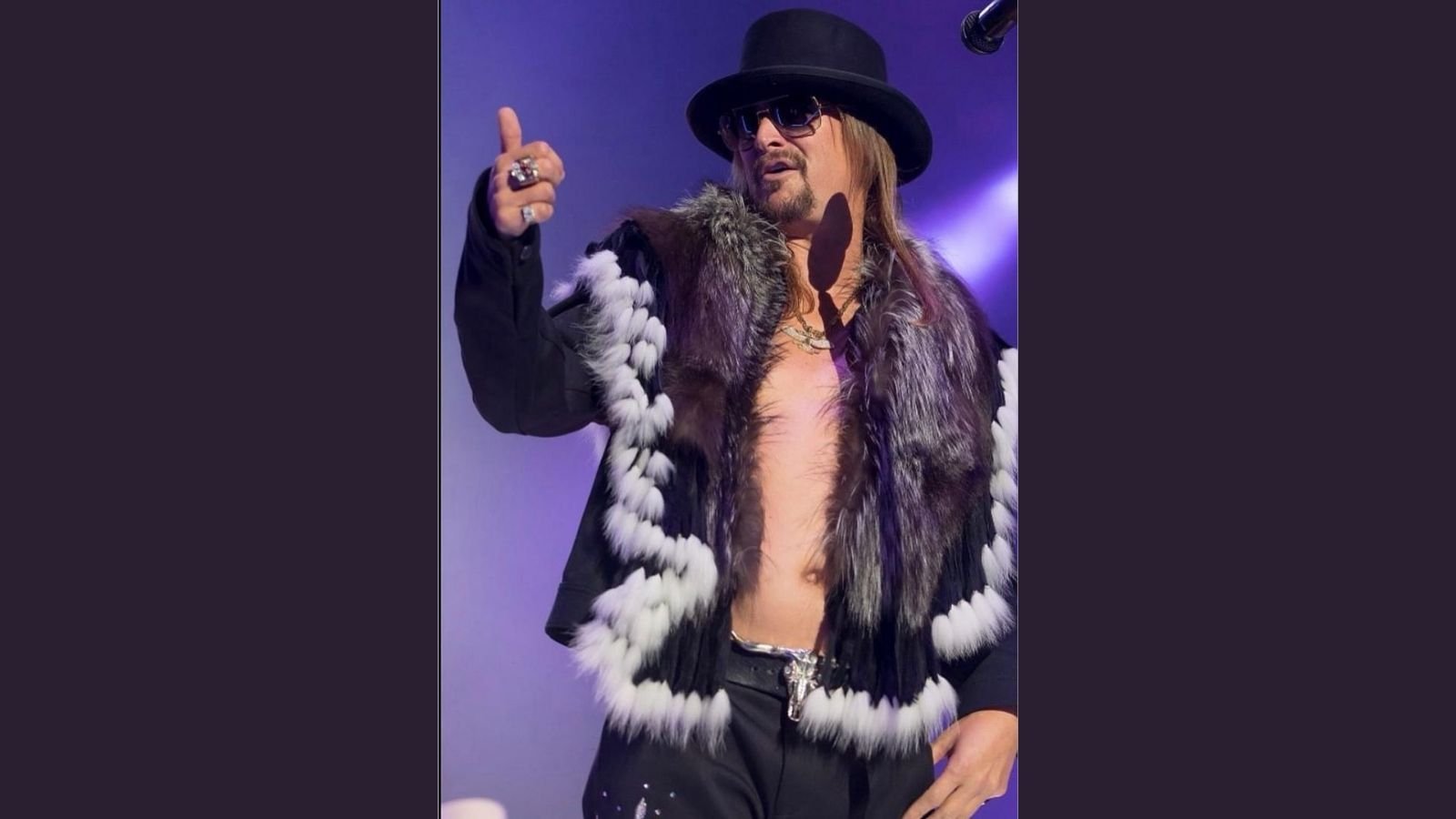
Kid Rock is currently at the center of a media firestorm regarding his 2026 ‘Freedom 250 Tour’ and its polarizing “First Class” ticket options. While the artist is known for his populist branding, his team recently confirmed that a tiny fraction of front row seats are priced at a staggering 5,000 dollars each.
This move matters now because it serves as a high-profile experiment for Ticketmaster’s new anti-scalping technology at a time when the federal government is actively suing the ticketing giant over its market dominance.
According to Pollstar data, the average price for a top tour ticket in 2024 sat around 135 dollars, making these premium seats roughly 37 times more expensive than the industry standard. This price gap has sparked a divide between fans who appreciate his efforts to curb scalpers and those who feel the cost of proximity to the stage has become unreachable for the average person.
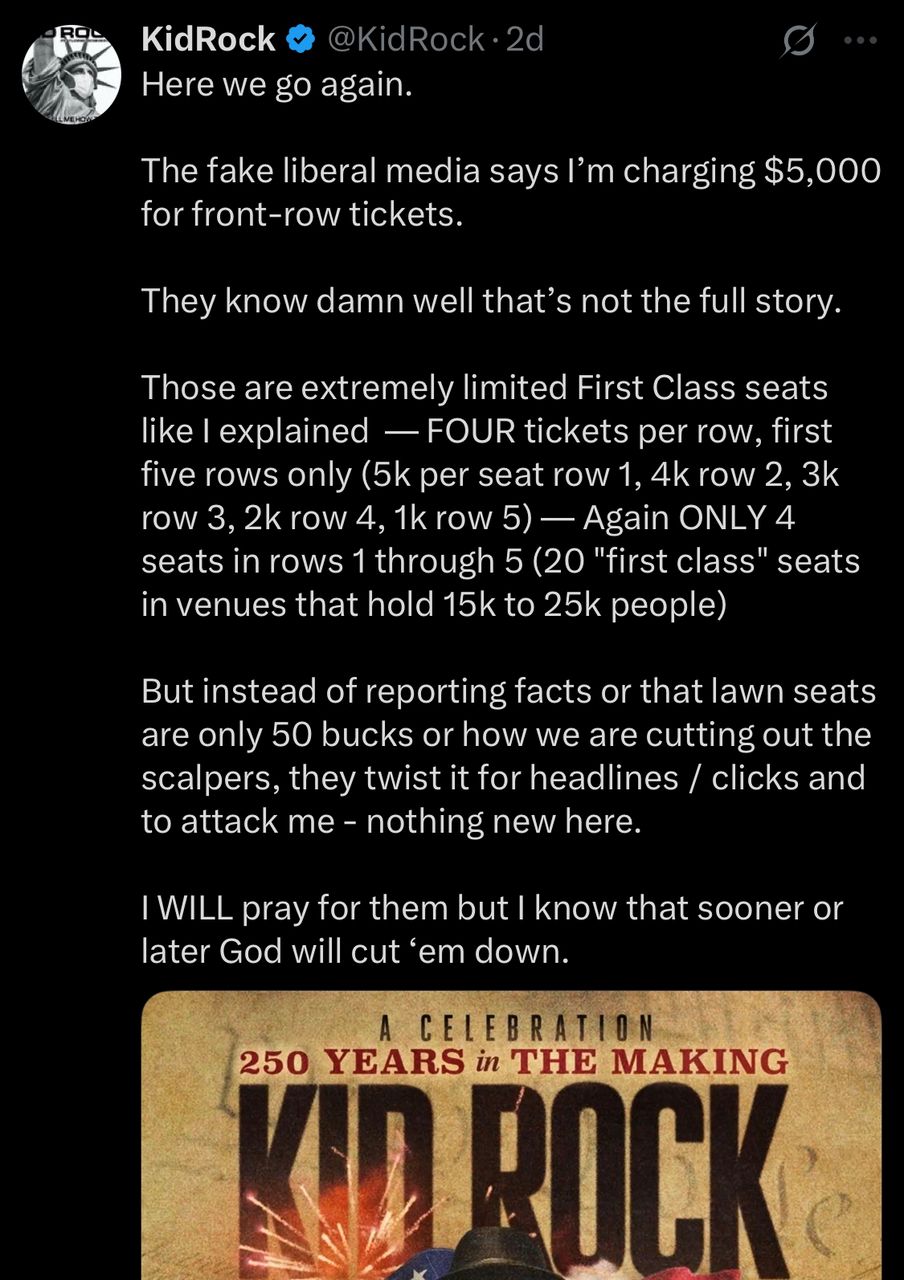
The singer has been quick to defend the strategy by highlighting the math behind the madness. In a detailed statement, he clarified that there are only four of these “First Class” seats per row in the first five rows of each venue. This means only 20 people out of a crowd of up to 25,000 will be paying those premium prices.
He noted that the rest of the venue features much more accessible pricing, including lawn seats that reportedly are around 50 dollars. He claimed that many media reports are intentionally leaving out the context of these cheaper tickets to create a more controversial headline.
In a post shared on social media, he expressed frustration with how the story is being framed and went so far as to state that while he will pray for the journalists involved, he believes that “sooner or later God will cut ‘em down.”
The Logic of the Two-Tier Tour
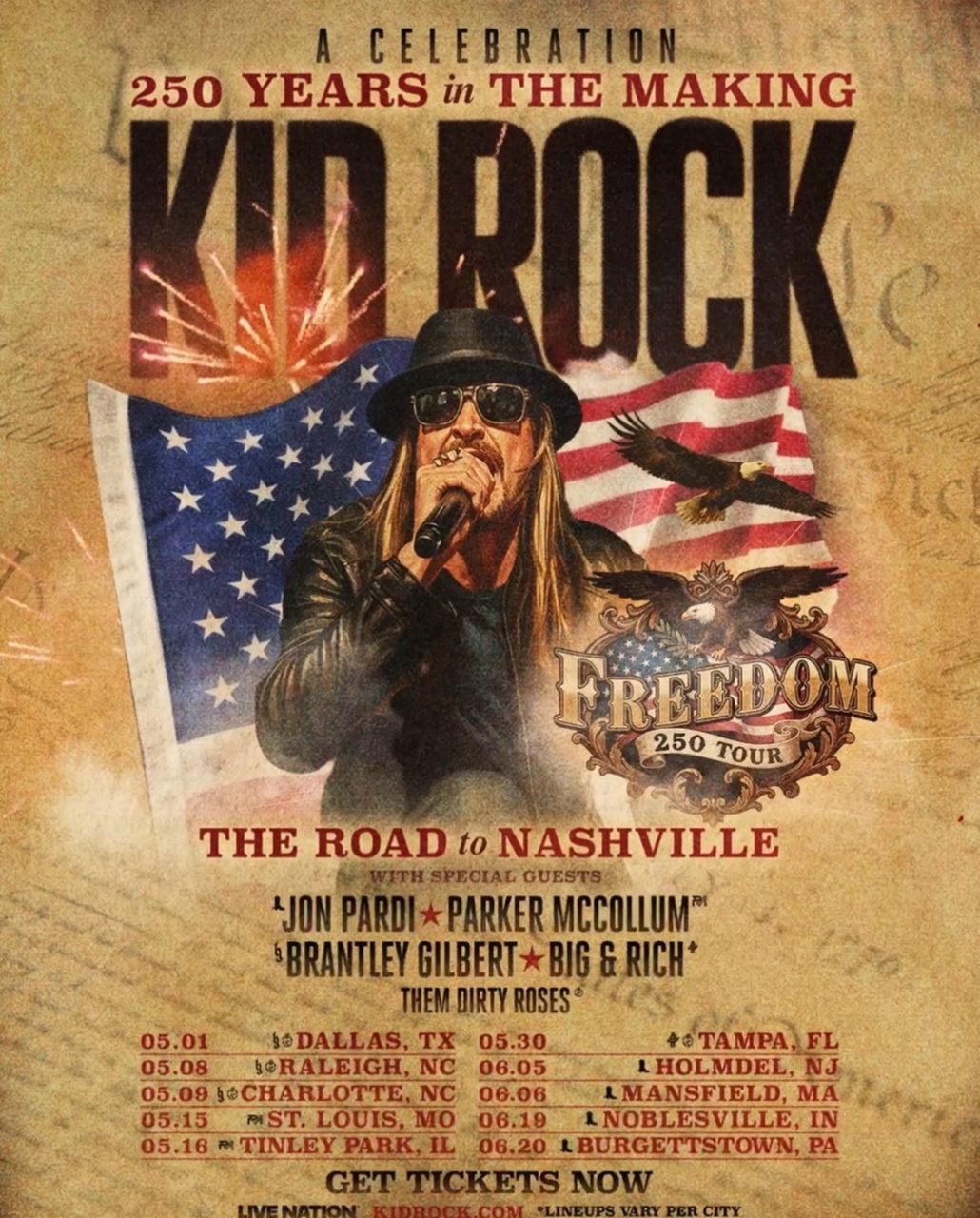
The Freedom 250 Tour is scheduled to hit several major venues starting in May 2026 with dates in Dallas, Charlotte, and Tampa. Fans looking at the seating chart will see a unique pricing structure that scales down quickly from the 5,000 dollar front row.
The second row is priced at 4,000 dollars, the third at 3,000 dollars, the fourth at 2,000 dollars, and the fifth at 1,000 dollars. Beyond these specific 20 seats, prices drop to approximately 500 dollars for the remainder of the front section.
This suggests a model where a few high spenders help keep the costs lower for the thousands of fans sitting in the back or on the grass. It is a bold approach that treats the very front of the house like a luxury airline cabin rather than a traditional mosh pit.
This pricing structure is particularly interesting given the musician’s recent political activity in Washington, D.C. Earlier this year, he testified before the Senate Commerce Committee about the dangers of ticket scalping and the lack of transparency in the industry. He called for more artist control over how tickets are sold and suggested that resale markups should be capped.
He even referred to the current ticketing landscape as a “monopoly dressed up as innovation.” By setting his own high prices for the front row while locking out resellers, he appears to be trying to reclaim the profit that usually goes to third-party brokers. This strategy puts him in the unique position of being both a critic of the system and a participant in its most expensive tier.
Fighting Scalpers with a Closed Loop
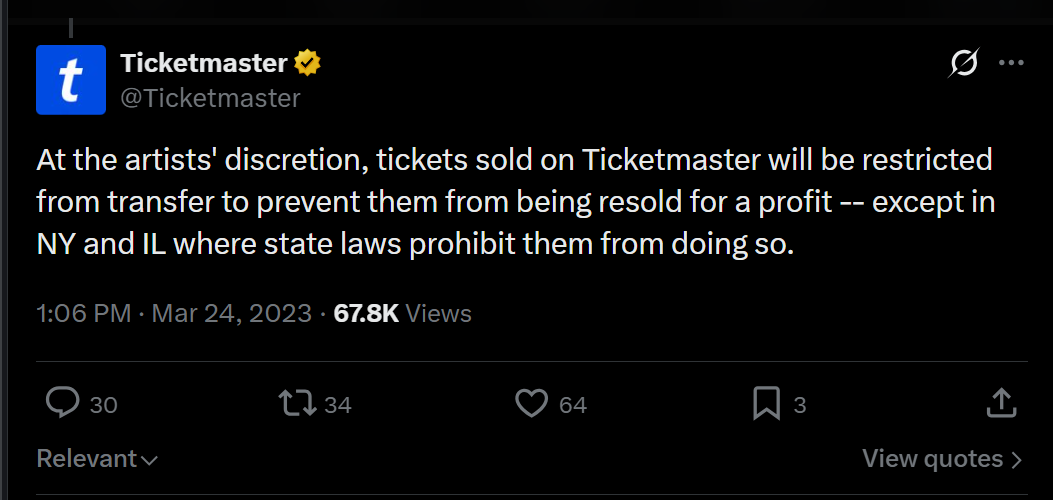
To protect the rest of the fans from inflated prices, the tour is utilizing the Ticketmaster Face Value Exchange. This program allows fans to resell their tickets only at the original price they paid, which includes any fees or taxes.
In many states, ticket transfers have been disabled to ensure that seats cannot be moved to other platforms where they might be flipped for a profit. However, this rule does not apply in states like Illinois, where local laws prevent artists from restricting the resale of tickets. In those markets, the artist has less control over what happens on outside websites.
This highlights the complex legal patchwork that performers must navigate when trying to manage their own ticket inventory.
The success of this premium pricing model remains to be seen, as early sales figures suggest some fans might be hesitant. While the June 19 date in Noblesville, Indiana, reportedly sold out its $ 5,000 front-row seats, other markets still show available inventory in the premium sections. Reports from mid-February 2026 indicate that “hundreds” of seats are still available at various venues across the country.
This raises the question of whether the market for multi-thousand-dollar tickets is as deep as his team anticipated. It is also unclear if these high-priced seats include any extra benefits such as backstage access or merchandise, as those details have not been specified in official tour materials. Without those added perks, the price is based entirely on the view of the stage.
A New Era for Concert Transparency
The controversy arrives at a time when the Federal Trade Commission is taking a very close look at how Live Nation and Ticketmaster operate. A lawsuit filed by the FTC in September 2025 accuses the companies of using deceptive pricing and allowing brokers to illegally acquire large blocks of tickets.
According to court documents, these practices have cost consumers billions of dollars in inflated fees and secondary market markups.
The musician’s decision to work within this system while using his own pricing rules creates a fascinating tension for the industry. He is essentially trying to prove that an artist can manage their own economy without the interference of middlemen, even if that means charging high prices to those who can afford them.
This tour will likely serve as a case study for other major acts who are tired of seeing their front row seats sold for thousands of dollars on the secondary market, with none of that money going to the performer. If the Face Value Exchange successfully keeps the 50-dollar lawn seats in the hands of real fans, it could provide a roadmap for future tours.
On the other hand, if the high price of the “First Class” section continues to dominate the conversation, it might make it harder for artists to maintain a populist image. The real impact will be measured not just in ticket sales, but in whether this model actually makes the concert-going experience feel more fair to the people in the back.
The music industry is watching to see if this blend of luxury pricing and strict resale controls is the future of the live experience.